


Subjected to constant thermal and mechanical stresses, the components of industrial machines and electric motors require exceptional insulation. When designing or wiring a stator, the choice of electric motor cables and their insulating materials determines the longevity and reliability of the entire system.
In this technical overview, we analyze how the radiation cross-linking process transforms the structure of polymers, ensuring exceptional thermal performance for RADOXⓇ cables and eliminating production line scrap.
The Limitations of Standard Materials in Electrical Cable Insulation
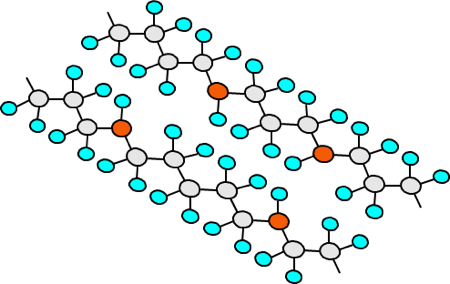
Traditional thermoplastic materials, such as PVC or standard rubber, are composed of long, thin molecules arranged in a random order. The adhesion between the various molecules is the only force holding the structure together.
As soon as the material is heated, this weak adhesive bond breaks down. The molecules are free to slide over one another, causing the insulation to melt. When the material cools, the bonds reform and establish a new geometric shape. This instability makes standard cables unsuitable for use as heat-resistant cables in harsh industrial environments or under heavy overloads.

What Is a Radiation-Crosslinked Cable and How Is It Made?
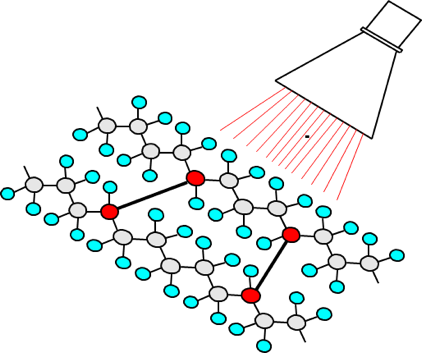
This limitation is overcome through the crosslinking process, a treatment similar to the vulcanization of rubber applied to synthetic polymers. Crosslinking can be achieved chemically or, in a much more precise and clean manner, through irradiation with electron beams (beta or gamma rays).
Today, the RADOXⓇ technology developed by Huber+Suhner utilizes precisely this irradiation process with high-energy electron accelerators. During this treatment, the cable insulation is bombarded by a stream of electrons that breaks certain hydrogen-carbon bonds, releasing hydrogen atoms.
To achieve a new energy equilibrium, the carbon atoms that are temporarily unpaired immediately form new chemical bonds with the carbon atoms of adjacent molecular chains. The result is the transformation of the polymer from a thermoplastic (meltable) to an elastomeric (non-meltable) material. This creates an extremely robust and stable three-dimensional network structure: cross-linked polyethylene.
Why RADOXⓇ heat-resistant cables optimize production
The modification of the molecular structure achieved through irradiation offers a range of application benefits to manufacturers of electrical machinery and resolves the most common problems encountered in assembly and wiring departments:
- Solder resistance: the insulation of RADOXⓇ cables does not melt or shrink, even when subjected to high transient temperatures or direct contact with a tin-soldering iron. This eliminates production scrap caused by exposed conductors during soldering operations.
- Thermal stability: the material retains its mechanical, chemical, and dielectric strength properties even at high continuous operating temperatures, withstanding temporary temperature peaks up to 250°C.
- Elastic memory effect: the material’s behavior is similar to that of heat-shrink tubing. Any crushing or minor geometric deformations caused by mechanical processing or automatic stripping can be restored simply by applying heat.
- Chemical compatibility in insulation processes: the cross-linked structure resists the aggressive action of paints and impregnation resins, allowing the cable to withstand oven curing cycles without cracking or stiffening.
Technical comparison between traditional insulation materials and RADOXⓇ cables
To support design decisions, this table compares the behavior of common thermoplastic insulations with the performance guaranteed by RADOXⓇ technology:
| Insulation characteristics | Standard cables (PVC or rubber) | RADOXⓇ technology cables (Cross-linked polyethylene) | Advantage for the workshop and design |
| Welding behavior | Melts and shrinks rapidly, exposing the conductor | Stable, no thermal shrinkage | Elimination of waste in the wiring line |
| Transient peak temperature | ~105°C (Above which the material degrades) | Up to 250°C (Maintains electrical insulation, depending on the type of cable selected) | Total protection against short circuits caused by overload |
| Reaction to impregnation ovens | Risk of premature aging and cracking | Excellent chemical resistance to paints and solvents | Optimization of the stator insulation cycle |
Using a high-quality cross-linked cable allows for a reduction in the outer diameter of the insulation while maintaining the same electrical insulation voltage. This facilitates the miniaturization of motors and reduces the overall weight of industrial wiring harnesses. The unique properties of this product line are the result of a high-tech manufacturing process that ensures consistent performance throughout the machine’s entire lifecycle.
To analyze the technical specifications of the conductors or to identify the correct cross-section for your industrial application, you can use our direct support channels: talk to a technician.